

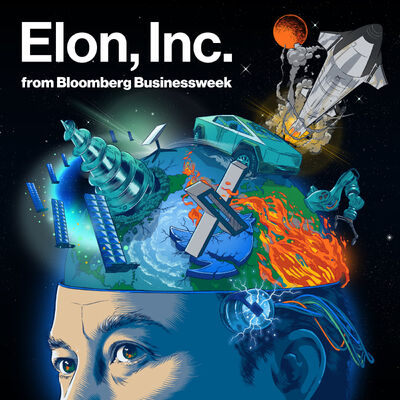
 Elon, Inc.
Tesla's Master Plan, Part Quattro
· Summarized
Key takeaways
- Tesla's Master Plan Part Quattro marks a crucial moment for the company amid declining sales and controversies.
- Musk's focus has shifted from automotive innovations to AI and robotics, potentially diluting Tesla's identity and mission.
- The company faces significant challenges in maintaining sales amidst growing competition and changing market dynamics.
- Elon Musk's political positions may be affecting Tesla's brand perception and sales, raising questions about the company's future marketing strategies.
Summary
Introduction to Tesla's Master Plan, Part Quattro
In a notable reveal on Labor Day, Elon Musk introduced Tesla's Master Plan Part Quattro. This latest iteration marks a crucial moment for Tesla, which faces challenges including dwindling sales, high-profile controversies concerning Musk's political stance, and a shifting market landscape with growing competition from companies like BYD. The podcast features insights from automotive editor Craig Trudell and Musk reporter Dana Hull, who explore the implications of this Master Plan for the future of Tesla.
The Shift in Tesla’s Focus
The discussion highlights a significant pivot in Tesla's focus towards robots and AI, particularly the humanoid robot Optimus, which Musk claims will account for 80% of Tesla's value. The hosts argue that this shift signifies Musk's boredom with the traditional car industry and his desire to redefine Tesla's mission from sustainable transportation to a broader vision of 'sustainable abundance.' This evolution raises questions about the clarity and substance of the Master Plan, making it appear vague and disconnected from the company's original goals.
Impacts on Tesla’s Auto Sales
The podcast delves into Tesla's declining auto sales across key markets, attributing some of this to Musk's controversies and focusing on how the EV tax credit changes might influence future sales. Craig Trudell outlines the challenges in Tesla's core markets, while Dana Hull discusses the company's attempts to expand into new regions and launch new models amid a crumbling market position. There's a concern about maintaining consumer and investor trust as Musk's attention seems diverted to AI over automotive innovations.
Elon Musk’s Role in Tesla's Brand
A deeper reflection in the podcast concerns the intertwined relationship between Musk and Tesla's identity. The hosts propose that Musk's outspoken political engagement is impacting sales and public perception of the brand, particularly in European markets. They speculate on the possibility of Tesla embarking on a rebranding journey to slightly detach its image from Musk, albeit recognizing the challenges in doing so due to his historical significance within the company.
Sponsors
- Stock Movers Report · Short audio reports, five minutes or less, delivered throughout the day about stock market movers and trends.
Show notes
Labor Day is generally a slow news day in the US. But this year it happened to be the day Elon Musk chose to unveil Tesla’s “Master Plan, Part 4.” Since its first installment in 2006, the electric vehicle-maker’s future roadmap has been seen by some as a big part of the company’s identity. The latest version comes at a critical moment for the company. With Tesla sales down in many markets, tepid interest in new models and high-profile controversies often stemming from its voluble CEO, his right-wing politics and association with Donald Trump—the stakes are high.
In this week’s episode of Elon, Inc. Max Chafkin invites Bloomberg automotive editor Craig Trudell and Elon Musk reporter Dana Hull to discuss the document and the state of Tesla. Most noteworthy in the report they say is a newfound focus on robots, specifically the humanoid autonomous Optimus model. As a matter of fact, Musk himself followed up on X and claimed in his usual hyperbolic fashion that around “80% of Tesla’s value will be Optimus.”
But what about the cars? Trudell says he remembers the priorities around the previous big Tesla plan in 2023 (a year before Trump was re-elected) and how they have changed. “Right around that time, this was a company that was all about sustainable energy,” Trudell says. Now “it’s all about AI, it’s all about robots, it’s all about self-driving cars.” Hull takes things a step further and pinpoints what she says is a potential weak point for the company: “I think that Tesla has a real marketing problem where you have a CEO who is clearly bored of the car industry.”
But more broadly, regarding the question of whether the company will be able to turn it’s struggling car business around, Chafkin has a theory.
“It feels like there’s a little bit of an effort, maybe even a deliberate effort underway to untangle Elon from the future of Tesla,” he says.
See omnystudio.com/listener for privacy information.
Follow this show on AudioBrevity and new episodes get summarized for you. Create a free account