

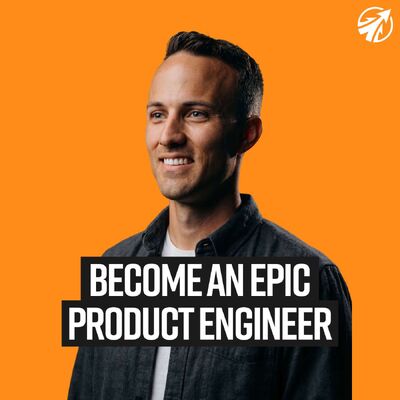
 Become an Epic Product Engineer
Triage your backlog with LNO - product-minded engineering with Sam Julien
· Summarized
Key takeaways
- Judgment is the only remaining moat for software engineers because technical skills and speed have become commoditized by AI tools.
- Product-minded engineers deeply understand user needs and product context to improve collaboration, push back on specs, and make better trade-offs.
- Engineers should be familiar with triage frameworks like LNO to prioritize their backlog effectively based on impact, effort, and necessity.
- Providing clear intent and problem context to AI agents results in better outputs and reduces unnecessary iterations.
- Continuous discovery—regularly engaging with users, analyzing telemetry, and assessing impact—is essential in a rapidly evolving AI-driven market.
- Measuring impact and value should guide what engineers work on, not just activity or output, especially as AI reduces the effort needed to produce code.
- Engineers can benefit from understanding frameworks like Jobs to Be Done and RICE to communicate effectively about scope and priority.
- Developing a product mindset helps engineers influence the business, advocate for better decisions, and build more durable skills.
Summary
Introduction and Background of Sam Julien
Kent C. Dodds introduces the episode and welcomes his guest, Sam Julien, a seasoned product professional with a journey from self-taught developer to director of product. They recount their first in-person meeting at a conference in San Francisco ten years ago, noting the changes and progress in their careers and the industry since then. Sam shares his diverse experience across coding, marketing, and product, emphasizing his current role at CopilotKit, which focuses on generative UI, and his authorship of an O'Reilly book, Agentic GraphRAG. The conversation sets the stage for exploring the evolving role of software engineers, especially as AI tools automate many coding tasks.
The Shift Toward Product-Minded Engineering
Sam discusses how AI advancements have leveled the technical skill playing field, making 'how' something is built less of a competitive moat. Instead, the critical differentiation now hinges on good judgment—knowing what to build, when, and why. Kent supports this view, emphasizing that being product-minded is increasingly vital, especially since the traditional scarcity of technical skills is diminishing. They explore why engineers should understand the product context deeply enough to challenge and refine specs, leading to better outcomes and more collaborative engineering and product processes.
The Importance of Pushing Back and Collaboration
A key theme is the value of engineers who can push back on given specifications, not out of defiance but to improve product outcomes. Sam explains that such engineers use telemetry, user feedback, and product understanding to recommend better options. Kent shares his own experience with AI agents, highlighting that the bottleneck has shifted from technical capability to decision-making and judgment. Both agree that a collaborative approach, where engineers understand user problems deeply, leads to more effective and impactful solutions—especially with the assistance of AI.
Frameworks for Prioritizing and Triaging Work
The conversation dives into frameworks like LNO (leverage, neutral, overhead), RICE, Jobs to Be Done, and North Star metrics as tools for engineers to assess their backlog. Sam emphasizes the practicality of LNO for triage: identifying work with high impact relative to effort, whether necessary, or candidates for automation. Kent echoes the importance of measuring value, impact, and effort, especially in AI-enhanced development, to avoid just shipping features without understanding their long-term benefit. They advocate for applying these frameworks regularly, even for small weekly reviews, to make better prioritization decisions.
Understanding and Communicating Intent with AI Agents
The episode underscores the importance of defining problems, not just solutions, when working with AI agents. Sam advocates for providing context and explicit intent before engaging an agent, which improves the quality of outputs and reduces repetitive iterations. Kent observes how recent AI improvements allow for more transparency and debugging—asking the agent why it made certain decisions or what assumptions it's based on. They discuss the significance of clear communication, shared vocabulary, and intention setting to harness AI effectively while ensuring the engineering aligns with product goals.
The Role of Engineers in a Fast-Changing Market and Continuous Discovery
Sam highlights the need for engineers to be adaptable in fast-moving AI markets, where product demand, customer needs, and capabilities evolve rapidly. Continuous discovery—regularly engaging with users, analyzing telemetry, and assessing impact—is vital to avoid building features that quickly become obsolete. Kent agrees, noting that this ongoing iterative approach ensures products deliver real value. They recommend focusing on impact, not just activity, and using frameworks like Teresa Torres' to maintain agility and relevance in AI-driven product development.
Final Recommendations and Homework for Listeners
The episode concludes with practical advice: engineers should spend a brief time each week triaging their backlog using frameworks like LNO, asking why they are doing each task, and understanding the effort versus impact. Kent advocates for this habit to develop better judgment and product awareness, regardless of role. Sam encourages exploring resources like Teresa Torres' work for continuous discovery insights and checking out CopilotKit’s open-source projects that embody the discussed philosophies. The overarching message is to integrate product thinking into daily engineering practices to improve long-term impact.
Sponsors
- CopilotKit · CopilotKit offers generative UI frameworks for multiple front-ends, including Slack and Teams. They also have open source libraries and a protocol for generative UI that embody the philosophies discussed.
Show notes
If you only get asked about feasibility, this episode is for you. Kent talks with Sam Julien - Director of Product at CopilotKit, author of Agentic GraphRAG - about moving past ticket-taking, collaborative product-engineering dialogue, and frameworks that help you push back with vocabulary.
They cover leverage / neutral / overhead triage, Kagan's four big risks, communicating intent with AI agents, and why engineers need product models even when they have a PM.
- (00:00) - Meet Sam Julien
- (01:26) - Dev to DevRel to product
- (03:37) - Product, design, and engineering overlap
- (06:00) - Durable skills as agents write code
- (12:01) - Get closer to customers
- (15:34) - Building a product-minded engineering team
- (18:46) - When technical work was the whole job
- (25:28) - Talk through the problem first
- (33:26) - Sales-driven development and gatekeeping
- (36:26) - Beyond feasibility
- (39:35) - LNO, RICE, and friends
- (42:42) - Continuous discovery and agents
- (46:44) - Communicating intent to AI
- (51:27) - Homework: triage your backlog
Sam Julien went from self-taught web developer to developer relations to product. He is Director of Product at CopilotKit (generative UI across front ends, Slack, Teams) and author of the O'Reilly book Agentic GraphRAG.
The through-line is product-minded engineering as a durable skill. Implementation-only careers are getting thinner as agents take more code work. Sam's article on building a product-minded engineering team name-drops jobs-to-be-done, Kagan's four big risks, continuous delivery, LNO (leverage / neutral / overhead), DHM, RICE, and North Star - and he lands on LNO as especially practical for backlog triage.
Leverage work: small effort, outsized outcome. Neutral: necessary, so scope it. Overhead: automate or drop - often a fit for AI. Engineers need these models so they can push back with shared vocabulary, especially when the PM is checked out. Feasibility alone is not enough; value, usability, and business viability belong in the dialogue.
They also talk collaborative product-engineering conversations, gatekeeping sales-driven development, and communicating intent clearly when agents execute.
Homework: spend ten minutes on your backlog and apply at least one triage framework (LNO or similar). Extra credit: watch something recent from Teresa Torres.
Homework
- Open your backlog once this week.
- Spend about ten minutes sorting items with a triage lens (LNO - leverage, neutral, overhead - or another framework from the episode).
- For each item, ask why you are doing it, what the effort is, and what the value or impact is.
Resources
- Sam Julien
- Building a Product-Minded Engineering Team
- CopilotKit
- Sam on X
- Sam on GitHub
- Sam on LinkedIn
- Agentic GraphRAG (O'Reilly)
Guest: Sam Julien
Host: Kent C. Dodds
Follow this show on AudioBrevity and new episodes get summarized for you. Create a free account