

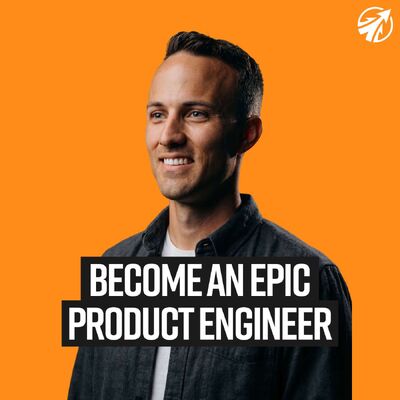
 Become an Epic Product Engineer
AI is a tool, not a silver bullet - product discovery with Peppe Silletti
· Summarized
Key takeaways
- Customer discovery and user research remain vital, even with the availability of AI tools that can rapidly generate code and prototypes.
- Product engineers should focus on owning specific outcomes, working end-to-end, and understanding the bigger system context, not just coding tasks.
- AI allows for faster MVPs and experimentation, but without proper discovery and data interpretation, it can lead to misguided efforts and feature bloat.
- Skills like problem framing, interviewing without solutions, and understanding user experience across layers are crucial for long-term value as automation advances.
- Effective prioritization depends on recognizing real pain points, patterns from feedback, and balancing technical constraints and business impact.
- The traditional developer role is shifting toward greater ownership and strategic involvement, with a need for skills beyond just coding—namely empathy, system thinking, and customer insight.
Summary
Understanding the Roles of Product Engineers and Product Managers
This section explores the distinction between product engineers and product managers. Peppe Silletti emphasizes that product engineers typically work on smaller, specific aspects of a product—owning outcomes from end to end—such as prototyping, implementing, and measuring the impact of features. In contrast, product managers are portrayed as the 'big picture' custodians, focusing on overall strategy, stakeholder management, and holistic product perspective. The conversation highlights a shift in thinking, with product engineers taking on more responsibility and ownership traditionally held by product managers, especially in high-trust environments like PostHog, where engineers make many product decisions themselves.
The Impact of AI on Product Development and Discovery
Peppe discusses how AI has changed the landscape of product development, particularly in reducing the cost and time of writing code. While AI can generate MVPs rapidly, the importance of customer discovery and data-driven decision-making remains unchanged. The key challenge is avoiding the trap of overbuilding or including too many features, which can add noise and obscure real user needs. He emphasizes that AI tools should augment—not replace—the fundamental activities of problem framing, customer interviews, and feedback loops. The narrative stresses that AI is a tool that, if misused, can lead to faster but misguided product directions.
Building Skills for the Future of Product Engineering
This section emphasizes durable skills that will remain valuable even as AI takes on more coding tasks. Peppe emphasizes the importance of framing problems correctly, conducting non-solution-biased customer interviews, and understanding user experience broadly, including API design and internal tools. These skills foster better collaboration, more accurate problem identification, and more effective solutions. He advocates for engineers to develop empathy, understand the bigger system, and engage early in discovery processes, making them more impactful and aligned with real user needs.
Effective Prioritization and Mitigating Noise in Product Development
Peppe discusses how to prioritize tasks after achieving product-market fit, stressing the importance of identifying patterns across customer feedback and usage analytics. He notes that challenges include distinguishing between real pain points and latent needs that customers can’t articulate. Prioritization should balance customer pain points, technical feasibility, and potential ROI. He also highlights the risks of feature bloat and the necessity of maintaining discipline to avoid overcomplication, which can harm user experience and system maintainability. Ultimately, he advocates for a measured approach, emphasizing simplicity, user focus, and early discovery.
The Evolving Role of Product Engineers and the Future Outlook
The podcast explores how the role of product engineers is evolving, with examples like PostHog illustrating that many teams have historically operated with engineers owning end-to-end product decisions. Peppe notes that in some innovative companies, engineers are deeply involved in discovery and decision-making, often replacing traditional product managers. The conversation points toward a future where engineers are more autonomous, owning outcomes, engaging directly with customers, and making strategic decisions—shifting the traditional boundaries of roles. This evolution emphasizes the importance of skills like problem framing, UX understanding, and system awareness.
Sponsors
- PostHog · PostHog treats product engineers vs product managers, highlighting that product engineers have owned decisions for years before product managers stepped in. Their approach emphasizes that product engineers can handle a lot of product decision-making themselves.
Show notes
If shipping got cheap and you are still not sure you are building the right thing, this episode is for you. Kent talks with Peppe Silletti, independent product engineer and host of The Product Engineers Podcast, about why customer discovery still comes first when AI can write the code in a day.
They cover startup vs scale-up trade-offs, raising the MVP baseline without adding noise, how PostHog treats product engineers vs product managers, and the durable skills that stay valuable when agents take more of the implementation.
- (00:00) - Meet Peppe Silletti
- (01:13) - Startup exploration vs scale-up bottlenecks
- (04:04) - Trade-offs before you paint yourself into a corner
- (06:07) - AI raises the MVP baseline
- (09:47) - Do not add so much that the data gets noisy
- (11:13) - AI is a tool, not a silver bullet
- (13:47) - Product engineers are not just managers
- (16:06) - How you know you built too much
- (18:49) - Prioritizing after product-market fit
- (24:30) - PM as compass, engineer as slice owner
- (27:08) - What Peppe learned hosting a podcast
- (29:25) - Durable skills as agents take the code
- (33:06) - Product engineering for backend engineers
- (38:26) - Homework: ally with your PM
Peppe Silletti is an independent product engineer and host of The Product Engineers Podcast. In this conversation, he and Kent dig into what changes when you move from a startup hunting for product-market fit to a scale-up fixing bottlenecks - and what AI does and does not change about that work.
A major theme is that writing code got cheap, so the old lean-startup constraint loosened. You can ship more than a classic MVP, then sculpt features away like Instagram dropping everything but photos. The risk did not go away. It got worse. You can feel productive while running in the wrong direction, because AI will happily agree with you. Discovery, customer interviews, and a tight feedback loop still decide whether you are learning or just shipping.
They also unpack the product manager vs product engineer split. Peppe points to PostHog: product engineers owned decisions for years before a PM showed up to hold the bigger picture. His model is a PM as compass, a product engineer owning one outcome end to end. For listeners who still take tickets over the wall, the durable skills are framing the problem, interviewing without jumping to solutions, and treating UX as more than pixels - including APIs and neighboring layers of the system.
Peppe's homework is deliberately social: shadow customer interviews, watch session replays with your team, and get into discovery before the roadmap is locked.
Homework
- Ask your PM if you can shadow customer interviews and listen for how people describe the pain.
- Set a weekly half hour to watch session replays with your team and name the friction you see.
- Once those two are happening, ask to join discovery earlier - when requirements and the roadmap are still being shaped.
Resources
- Peppe Silletti
- The Product Engineers Podcast
- Peppe on LinkedIn
- Peppe on GitHub
- The Product Engineers Podcast on YouTube
- Product management is broken. Engineers can fix it - PostHog
- Continuous Discovery Habits by Teresa Torres
- Laws of UX by Jon Yablonski
Guest: Peppe Silletti
Host: Kent C. Dodds
Follow this show on AudioBrevity and new episodes get summarized for you. Create a free account