

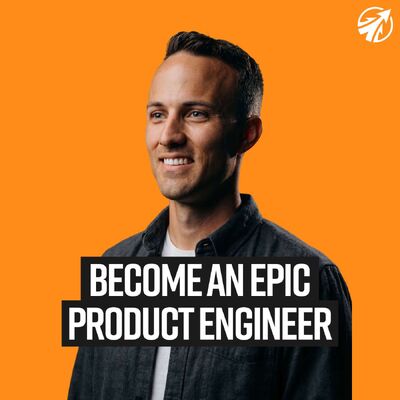
 Become an Epic Product Engineer
Talk to users, ship live demos, and build durable products with Michael Grinich
· Summarized
Key takeaways
- Deep understanding of market needs and durable problem spaces is crucial for building long-lasting products.
- Engage directly with users and stakeholders through live demos and informal testing to refine storytelling and validate ideas.
- Effective product-building involves aligning the product’s technical features with a sustainable business model, especially in enterprise markets.
- Patience and long-term commitment are critical in developing and scaling durable products that adapt over market shifts.
- Learning the underlying mechanics of AI models, such as transformers, significantly enhances a developer’s ability to innovate and communicate about AI-powered products.
Summary
Building for Durable, Market-Driven Problems
Michael emphasizes the importance of identifying problem spaces that are durable and adaptable over time, like authentication for agents and MCP. He advocates for understanding the business value early, ensuring that the product’s economic engine aligns with who pays and why they continue to pay. He highlights that a successful product isn’t just about making something people want but also about creating a harmonious relationship between product features and business models.
Effective Product Discovery and User Engagement
The discussion centers on the importance of talking to users and not just customers, for authentic feedback. Michael advocates for live demos as a powerful marketing and validation tool, comparing them to stand-up comedy — testing material in informal settings to refine storytelling and product presentation. He notes that frequent releases and demos help build confidence and understanding, and that observing user reactions is critical to finding product-market fit.
Gleaning Insights from Market Conversations and Validation Techniques
Michael details his approach to reaching out to product managers and enterprise IT leaders through cold emails and networking. He stresses the importance of asking questions that reveal real pain points rather than surface compliments, and how these conversations help refine a product’s strategic direction. Authentic engagement and asking focused questions about pain, decision triggers, and architecture help ensure the product truly meets market needs.
The Power of Storytelling and Demonstrations in Marketing and Testing
Michael shares that storytelling, live demos, and iterative testing are vital for effective product communication and validation. Using demos in smaller venues like meetups acts as a rehearsal for larger presentations, similar to comedy stand-up — where testing material helps perfect the delivery. Consistent practice and storytelling are emphasized as key drivers of success, making complex tech accessible and compelling.
Patience and Long-Term Thinking in Product Development
The conversation highlights the importance of patience in building durable products, with Michael noting that such projects often require years of development and market validation. He discusses the necessity of sticking to a problem space that holds value over time, rather than chasing fleeting trends. This long-term focus allows a company to adapt and remain relevant despite market shifts, exemplified by his experiences with authentication and agent systems.
Homework: Building an Understanding of AI Foundations
Michael recommends that listeners spend an afternoon watching Andrej Karpathy’s 'Let's build GPT from scratch' video. This exercise aims to deepen understanding of how transformer-based models like GPT operate, influencing how developers talk about AI, agents, and product design. Gaining this foundational knowledge helps integrate AI more effectively into product strategies and technical decision-making.
Sponsors
- WorkOS · Helped by WorkOS enterprise features like sign-in, permissions, logging, and integrations, which help companies grow faster and scale their apps for enterprise customers.
Show notes
If you are building something people want but still cannot grow it, this episode is for you. Kent talks with Michael Grinich, founder of WorkOS, about cold-emailing product managers, closing the feedback loop with real users, and why live demos beat polished decks.
They cover the missing step after "make something people want," how durable problem spaces survive market shifts (including auth for agents), and why storytelling is part of the product.
- (00:00) - Meet Michael Grinich
- (02:00) - Choosing the enterprise-ready niche
- (04:31) - Building for problems that are not yours
- (06:34) - Cold-emailing PMs who already shipped enterprise
- (10:44) - Questions that get past compliments
- (12:52) - Patience and durable problem spaces
- (15:57) - Beyond make something people want
- (20:25) - Auth for agents and MCP
- (23:57) - Talk to users, not just customers
- (28:42) - Live demos as tech marketing
- (31:39) - Test your story like Comedy Cellar material
- (39:10) - Monkey see, monkey do and Julia Child
- (43:03) - Homework: build GPT from scratch
- (46:10) - Where to follow Michael
Michael Grinich founded WorkOS to help software companies become enterprise-ready - SSO, directory sync, permissions, audit logging, and the rest of the stack that unlocks bigger customers. In this conversation, he and Kent dig into how that idea came from lived pain at a previous startup, and how he validated the market by cold-emailing and meeting PMs at companies like Dropbox, Slack, Asana, and Airtable.
A major theme is that "make something people want" is incomplete. Michael argues you also need an economic engine: who pays, why they pay continuously, and how the business model stays in harmony with the product. He ties that to picking durable problem spaces - WorkOS started in classic B2B auth, and the same foundation now matters even more for agents, MCP, and agent registration via auth.md.
They also get practical about product discovery. Talk to users, not only customers and dollar signs. Use live demos as the pinnacle of tech marketing. Treat small meetups like a Comedy Cellar set where you test material before the big stage. And when you show people how something works, you put yourself on the same side of the table - the Julia Child model of teaching by doing.
Michael's homework is concrete: spend an afternoon with Andrej Karpathy's "Let's build GPT from scratch" video so you understand the underpinnings of the systems you are building on.
Homework
- Watch Andrej Karpathy's "Let's build GPT from scratch" video (a few hours, one afternoon is enough).
- Hack along enough to rebuild a simple ChatGPT-like interface on top of a transformer you understand.
- Notice how that deeper mental model changes how you talk about agents, models, and product bets at work.
Resources
- Michael Grinich on X
- Michael on GitHub
- Michael on LinkedIn
- Michael on Bluesky
- WorkOS
- auth.md
- auth.md on GitHub
- WorkOS events on Luma
- Let's build GPT from scratch (Andrej Karpathy)
- The Mom Test
Guest: Michael Grinich
Host: Kent C. Dodds
Follow this show on AudioBrevity and new episodes get summarized for you. Create a free account