

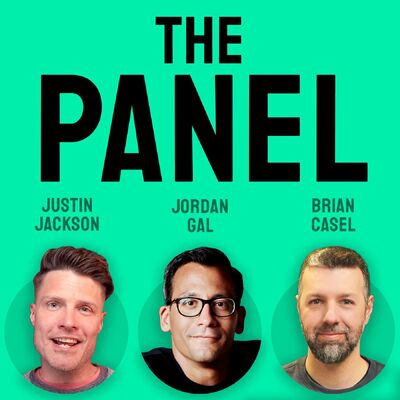
 The Panel
The Harder It Is, The Better
· Summarized
Key takeaways
- The process of building a portfolio of SaaS products can create resilience and multiple revenue streams, even if individual products eventually fade.
- AI tools are enabling rapid MVP development, automation, and growth experiments, which allow entrepreneurs to test many ideas efficiently.
- Leaning into hard problems and niche markets can be more effective than broad, general approaches, especially for smaller companies.
- Manual customer research, personalized outreach, and understanding customer language remain critical, even in an AI-driven marketing environment.
- Focusing on a few core marketing channels—such as SEO, AEO, and paid ads—allows systematic growth, but diversification and experimentation are still valuable.
- Success often depends on iterating and refining how automation outputs are used, balancing manual review with automation.
- Being willing to tackle complex, high-backfire challenges can open more significant opportunities than playing it safe.
- In uncertain times, making good bets on difficult problems and emerging niches can lead to long-term advantages over safe but low-reward options.
Summary
Introduction of Panel and Guest
The episode opens with the hosts Justin Jackson, Brian Castle, and Jordan Goll welcoming their guest Corey Haynes from Conversion Factory. Corey introduces himself humorously, noting he feels like a 'midget amongst giants' among the panel. The hosts acknowledge Corey's strong Twitter presence and his agency work, setting the stage for a discussion about his background and current projects.
Corey's Journey from Marketing to Coding and His Projects
Corey shares how he transitioned from being primarily a marketer to learning code, initially through a boot camp after founding Conversion Factory. He discusses his SaaS products, including TrueList and Magister, along with other side projects like church apps and MacOS tools. Corey emphasizes that he still keeps technical co-founders on some projects to mitigate risk and to leverage their expertise, despite his growing coding skills, especially with AI tools in 2023.
Managing Multiple Projects and Focus Strategies
The discussion explores Corey's approach to handling numerous projects simultaneously. He describes his personal strategy of using his marketing skills across multiple SaaS and content ventures, believing that his marketing efforts can extend further when diversified. The panel debates whether focusing on fewer projects might be better, but Corey explains his view that a portfolio approach, supported by AI tools and web presence, allows for a more resilient and scalable business. The importance of personal brand and SEO/AEO in driving traffic and growth is also highlighted.
The Impact of AI on Product Validation and Marketing
Corey talks about how AI and automation are transforming testing, product building, and marketing. He discusses using AI bots to run growth experiments across his repos, automating outreach, content, and metrics gathering. The conversation touches on balancing manual work with automation, emphasizing that manual customer research and manual effort still have crucial value despite AI's capabilities. Corey stresses the importance of iterative refinement and personal decision-making in leveraging AI effectively.
SaaS Marketing Channels and Strategies in 2023
The group analyzes current effective marketing channels for SaaS, noting that organic SEO and AEO (augmented SEO) are foundational, followed by paid channels like Google and Meta ads, with experiments ongoing in cold email and affiliate partnerships. Brian discusses his YouTube channel as a core channel, while Corey elaborates on layering marketing efforts using AI to optimize and diversify channels. They debate the rising importance of niche marketing, the decline of broad public bragging, and the challenges in paid acquisition due to platform shifts, especially in search and ads.
Focus vs. Portfolio Approach and the Value of Hard Problems
The discussion shifts to strategic thinking about product focus versus diversification. Brian reflects on his current stage, emphasizing careful product selection and quality, while others advocate for taking on hard problems as a way to differentiate and build sustainable growth. The panel agrees that tackling tough challenges and exploring less-explored niches can provide a competitive advantage, with the consensus leaning toward prioritizing hard, valuable problems over easy wins to ensure long-term success.
Final Thoughts and Advice on Building in Uncertain Times
As the episode concludes, the hosts acknowledge that despite skepticism, building strong, valuable products remains essential. Corey emphasizes the importance of balancing internal focus with external exploration, actively engaging with customer pains and niches, and being willing to pivot based on real-world signals. The panel encourages embracing the complexity of modern product and marketing strategies, leveraging automation and human effort alike, and focusing on meaningful problems as the way to thrive.
Sponsors
- transistor.fm · This podcast is hosted by transistor.fm.
Show notes
Corey shares how he moved from marketing into coding, why he still keeps technical co-founders on some products, and how he thinks about balancing services, software, and content. The group also digs into AEO, paid ads, churn in productized services, and why manual customer research still matters.
Timestamps:
00:00 - Intro
02:20 - Corey Haines and Conversion Factory
04:33 - Does everyone still need a technical co-founder?
06:21 - How Corey went from marketing to coding
10:08 - TrueList, Magister, and Corey’s other products
13:01 - Running several products instead of betting on one
15:26 - Building a business around a personal brand
17:33 - How AI changes testing ideas and building products
20:58 - Automated testing across 30 repos
24:50 - Spreading the risk across multiple products
27:24 - Josh Pigford and the debate over focus
31:31 - Why some products grow and then fade
34:33 - What to do when growth stalls
36:48 - SendFox, focus, and what counts as winning
38:52 - Churn and sales challenges in productized services
41:40 - Selling AI implementation and SEO services
46:14 - The value of talking to people
48:29 - What parts of marketing can you productize?
50:26 - SaaS marketing has changed—and Google feels it
52:52 - Which marketing channels should you try first?
56:24 - Finding the first customers for a niche product
59:14 - Learning how customers talk and buy
01:03:04 - AEO results: more visibility, traffic, and booked calls
01:05:24 - AEO beyond your own website
01:08:04 - The work AI still can’t skip
01:11:50 - Brian’s mix of ads, cold email, and experiments
01:16:03 - Growth curves and finding the next marketing channel
01:20:32 - Faster MVPs and choosing what to build
01:22:28 - Products Brian actually wants to work on
01:24:54 - Finding customers and problems worth solving
YOU ARE THE PANEL – send us your thoughts 🗣️
🎤 Send us an audio or video message
📧 Email us: panelpodcastshow@gmail.com
Links mentioned in this episode:
- Ruben’s comment on AI and marketing
- Josh Pigford’s new startup
- Corey Haines on GitHub
- Magister Marketing — AI Marketing Agent
- Jason Cohen’s “Elephant in the Room”
- Brian Casel on selling Productize
- Tim Soulo: “The only competitive advantage left is effort.”
- Conversion Factory — On-Demand Marketing for Tech Companies
- Corey Haines — Marketer, Builder, Writer
- Marketing Skills for Claude Code and AI Agents
- Truelist — Email Validation Platform
- Marc Lou on X
- Charleston AI — AI Engineering, Classes & Repair
Follow this show on AudioBrevity and new episodes get summarized for you. Create a free account