

 The AI Daily Brief: Artificial Intelligence News and Analysis
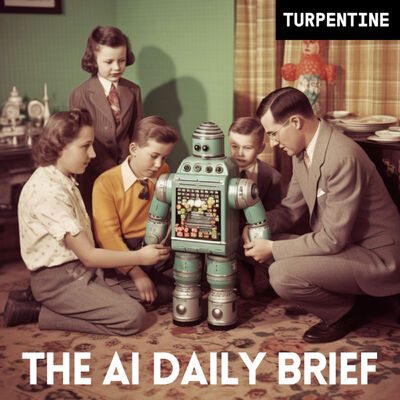
Why the Future of AI Has a Body
· Summarized
Key takeaways
- AI adoption at work can significantly decrease burnout, with users reporting lower stress compared to non-users.
- Google's Gemini Enterprise aims to streamline the integration of AI tools in corporate environments, enhancing user experience and productivity.
- The AI startup ecosystem is experiencing rapid growth, with successful funding rounds reflecting high demand for innovative AI solutions.
- The development of humanoid robots and embodied AI is accelerating, with significant advancements in robotics promising to bridge the gap between digital and physical intelligence.
Summary
The Impact of AI on Workplace Burnout
This section discusses a new survey from HR Management Platform UKG which shows that AI adoption at workplaces can significantly reduce burnout rates among employees. The survey indicated that 54% of workers not using AI reported burnout, while the percentage dropped to 41% among those who utilized AI. Despite widespread fears of job replacement due to AI, many workers acknowledged that effective AI implementation could lead to more enjoyable work experiences and aid in achieving meaningful tasks.
Google's Gemini Enterprise: The Future of AI in Work
The introduction of Google's Gemini Enterprise is a central theme in this episode, highlighting Google's efforts to bundle AI tools for corporate clients into one cohesive product. The launch aims to improve the accessibility and utility of AI in workplaces, featuring pre-built agents and improved integration across various platforms. The promise of transforming workflows through AI-driven solutions is emphasized, as Google seeks to streamline the deployment of AI technologies in business environments.
Funding Breakthroughs in the AI Space
Updates on funding in the AI startup ecosystem are presented, emphasizing the rapid growth and significant valuations of companies like NADN and ReflectionAI. NADN achieved a valuation of $2.5 billion after a successful funding round, reflecting the high demand for AI platforms. ReflectionAI has also raised $2 billion for developing U.S.-based open-source frontier models, emphasizing the growing interest in open-source solutions in AI.
The Rise of Humanoid Robotics
The discussion shifts towards physical AI and robotics, specifically the unveiling of the Figure O3 humanoid robot. The improvements in functionality and design of the Figure O3, aimed towards mass production and varied applications, symbolize a significant step in robotics. The episode also covers competitive advancements in the robotics space with companies like SoftBank and ABB merging their efforts in industrial robotics, alongside insights into the rapid development of humanoid robots in China.
Sponsors
- Insightwise · AI coach that thinks just like your client, helping to improve proposal pitches.
- KPMG · This seven-part series delivers real-world insights from leaders who are scaling AI with purpose.
- Robots and Pencils · Build impactful AI solutions that modernize apps and enhance human potential through AI.
- Notion · AI agents that complete entire workflows, expanding the capabilities of Notion.
Show notes
This episode explores why the next era of artificial intelligence will take physical form. It examines the rise of humanoid robots, breakthroughs in embodied AI, and how advances in robotics and action models are closing the gap between digital intelligence and the real world. The discussion also highlights how rapid progress in sensors, movement, and large action models is bringing general-purpose robots closer to everyday use.
Follow this show on AudioBrevity and new episodes get summarized for you. Create a free account